Praying like an Adult

Where did we get the idea that God is a divine vending machine? We put in a prayer and get what we want from God. I have heard this sentiment thousands of times, including from myself.

We think if the Vending Machine God doesn’t give us what we want then we choose not to believe in the God we created for ourselves. However that God doesn’t sound like a transcendent, omnipotent, omniscient being. That god is more like an over-indulgent parent with poor boundaries.

But we are praying for important things, like health, healing and peace in the world. Somehow wiping out suffering has never been a constant of human experience and that shows no sign of stopping. Sadly.

If our childish prayers aren’t about getting what we want it is about what God needs us to do, another self-important idea. I remember praying fervently as a child (and by fervently I mean eyes squeezed shut tight enough to produce a headache and perfectly pointed prayer hands to be sure the prayer reaches heaven) and said, “God I’ll do anything you need me to do but please don’t make go to Africa because I am scared of snakes and I saw the food those missionaries ate. I’ll starve to death so I can’t help you anymore.”

As I’ve grown over the years my prayers have turned less transactional and more intimate. It is usually not about getting things or doing things but about being aware of the presence of God and sharing my ideas, feelings, concerns and observations.

Prayers may be something like, “I wonder what You had in mind with that situation?” Or “ What are Your thoughts about this?”

My most frequent prayer is “………” which translated means “I don’t have words for this, I have feelings I cannot fully understand. You and I are together in this.”

Paradoxically, praying like an adult can bring us full circle back to a pre-verbal place wherein we can just be with God, sometimes still asking for things. And like any child with a wise parent sometimes getting what we want and sometimes not, but always getting a relationship.

X
Gratitude

Gratitude is the sign of noble souls. Aesop

Rejoice always, pray continually, give thanks in all circumstances; for this is God’s will for you in Christ Jesus. I Thessalonians 5:16-18

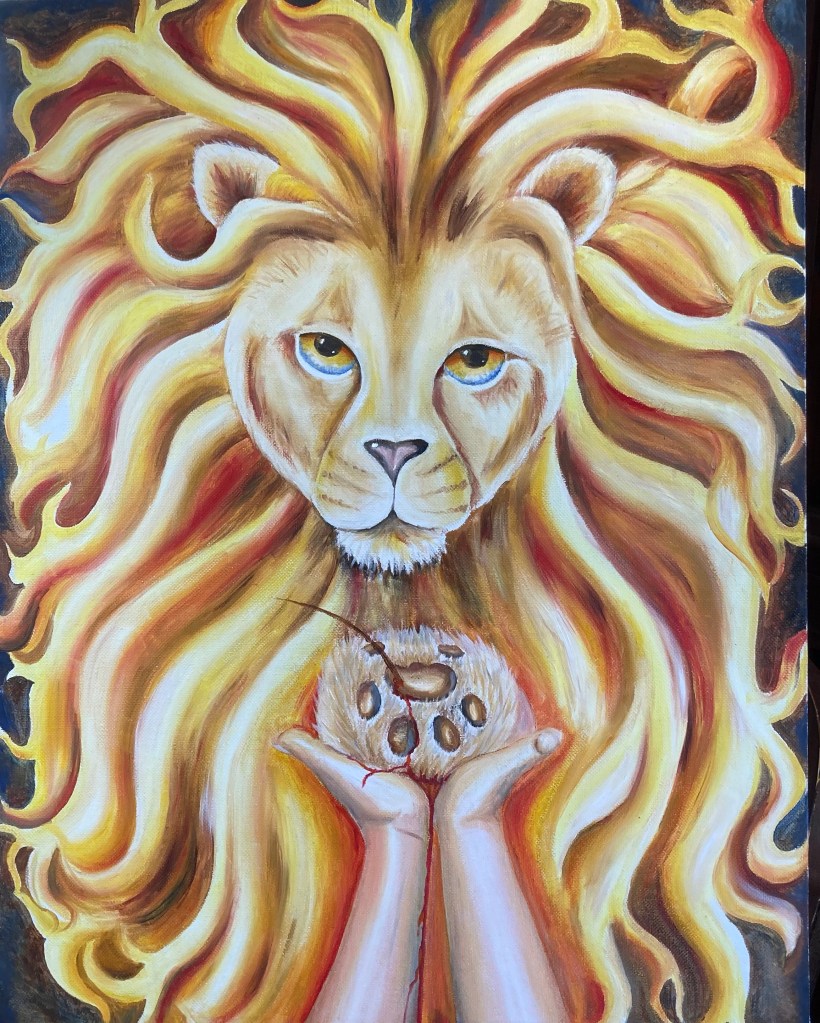
The above painting was inspired by gratitude around having a birth defect that had plagued me for years and fixed through surgery. Six years later I am grateful each morning that I walk without pain. This is my version of an often told story of gratitude.

One version is told about a runaway Greek slave who pulls the thorn from the lion’s paw. Later the slave was imprisoned and sent to Rome to be lunch for a lion. The creature who was to make a meal out of him turned out to be the lion he had helped. The lion showed his gratitude by not eating him. The slave was freed and traveled with the lion and the two became local celebrities.

This story has been told in different ways over the centuries but the idea of an unlikely friendship of opposites forged from gratitude remains a consistent theme. And the relief of suffering seems to be a common backdrop to gratitude.

While we generally avoid suffering somehow it comes to us all in some form. Maybe one of the meanings we can extract from suffering is to be grateful for those who help us through it. Or we can be thankful when it stops. It seems that some of the least grateful people are some of those who have not yet suffered.

Gratitude, which comes from the Latin word gratea, which means grace, graciousness or gratefulness, is a necessary component of emotional and spiritual maturity.

When we focus on gratitude we are appreciating what is good in our lives instead of focusing on what is deficient. In addition, we come closer to the source of our blessing which for believers always includes God.

Benefits of gratitude are many, including more and deeper positive emotions, greater happiness, better capacity to deal with adversity, better work and personal relationships, fewer doctor visits and overall better health.

However, eternal benefits of gratitude are a deeper bond with God. It can change our attitude from resentment and anger about deprivation to peace and joy. Suffering can be beautifully framed by gratitude around the kindness and good things that surround the pain. God allows suffering but also wants us to look at the entire situation. My deformation and healing experience has been an important shared experience between me and my God, one of my many spiritual treasures.

The Mark of Someone who Knows God

Whoever does not love does not know God, because God is love. I John 4:8

God is the embodiment of love. God is not just loving but the essence of love. We can know a lot about God, we may spend a lot of time learning about God, but this will not result in us being more loving.

To know God is to have a relationship where we are receptive to what God wants to give us. God wants to give us love, which if we receive it we are changed, and love will flow out to others. St. Bernard of Clairvaux once said, “ What we love we grow to resemble.” Our goal is to be striving to be the embodiment of love also.

It breaks my heart to see so many people who publicly claim to be followers of God who clearly are not living the out flowing of love that marks a believer. Our current crises of a pandemic and political unrest is an opportunity that many of us are missing show the love of God in a frightened and violent world.

Of course, this heartbreak can begin with myself. If I focus on my fear or my pain at the unnecessary suffering all around me, I can easily look away from the Love that embraces me every moment. Daily I must remember my focus and my identity as a Lover of God and others. It’s easier to be angry and blame someone for the suffering than to feel it. It often feels like it hurts too much to love.

With fires scorching the earth, storms tearing homes and cities apart, disease sickening and killing millions of earth’s citizens and incessant violence, it’s easy to turn off love to preserve ourselves from the pain that love sometimes requires us to suffer. But in doing so, it’s easy to harden our hearts to love as well as pain. When empathy dies, so does civility.

Part of the mystery of suffering is that if we share it with God, together we can tolerate it and even grow in understanding and wisdom. Love bears all things. It is the mark of the true believer, and is the visible evidence of being rooted and established in the love of God.

A Lonely Christmas

But Jesus often withdrew to lonely places and prayed. Luke 5:16 (NIV)

Be still and know that I am God. Psalm 46:10

Lonely is a frequently mentioned word in the therapy room when referring to Christmas, and especially this year, as many are separated from loved ones due to the pandemic. Depression and anxiety, the unwelcome twins who tend to visit around the holidays are extra obnoxious guests this year. The loss of community and family celebrations this year, as well as ongoing isolation, loss and fear is widespread. This has caused me to ponder what solitude and even loneliness can do to deepen our experience of God.

The pictures my mind paints to match the profound moments where human and God meet seem to be solitary events. The Annunciation, Moses on Mt. Sinai, Elijah in the cave, Jesus in the desert, and John the Baptist in the wilderness are just a few of the people who had powerful encounters with God while alone. In addition, many of the saints throughout history had life changing experiences while either alone or lonely. Even the events surrounding the Nativity seem to take place in remote, lonely places–fields and stables.

It seems that being alone removes our distractions from God, if we allow it. Humans are adept at distracting themselves away from painful or difficult feelings, it’s both a survival skill and a block to growth. However, it is loneliness, suffering and even pleasant solitude that pushes open a space in our souls for God to enter in powerful ways that are transformative. While we are alone, maybe we can set a space for God to join us, and this Guest will bring us a gift of joy and peace that our distractions would never allow us to have.

Safety and Delight

Keep me safe, my God, for in you I take refuge. I said to the Lord, you are my Lord. Apart from you I have no good thing. As for the saints who are in the Land, they are the glorious ones in whom is all my delight. Psalm 16:1-3 NIV and RSV

I wonder why the writer of this Psalm asked for God to keep him safe then immediately proclaimed how delighted he was in other people of God. For years this annoyed me and I grumbled in my mind to the author, “You obviously don’t know the saints I know.” Why did this author wreck an otherwise amazing chapter with this line?

Over the years I have gradually come to see that my spiritual life can only develop so far if I limit it to God and I. My spirituality got honed on the sharp edges of others, as I learned and am still learning patience, self-control, gentleness, perseverance, and unselfish love. And I am happy to say that I have and continue to provide that same service for others.

But I also learned about love, joy and peace from other believers. I also feel a sense of safety and support from the saints who are in the land even though I do not see them as the moment. I know whatever things come our way, we are in this together.

But delight is a feeling beyond growth, safety and love. It comes from a Latin word that means to charm. The gh was added in the 16th century by the association with light. I find that delight comes when we really see the otherness of people. We can be delighted we when we see them from the light of the eyes of God. We can be in awe of the variety of human personalities on this planet as we all search for the Transcendent.

Take this Cup of Suffering from Me

Father if you are willing, take this cup from me; yet not my will. But yours be done.

Jesus, Luke 22:42 NIV

During Holy Week I often think of Christ’s angst filled prayer in the Garden of Gethsemane. He was checking to see if there was any way he could escape the suffering he was about to endure. He also deferred to what God had in mind at the same time.

I’m good at praying the first half of the prayer, usually saying something like, “don’t let bad things happen,” or the fancy version, “Keep me safe O God, for in you I take refuge,” (Psalm 16:1) The second half is more of a silent surrender, which is shorthand for, “You are God, perfect in love, knowledge and wisdom. What You are doing seems bad and mean, but my intellect is limited so Your will be done, I accept that which I cannot control because I know you are the embodiment of love.” Then I reiterate that I don’t want to suffer, just in case I haven’t emphasized that enough.

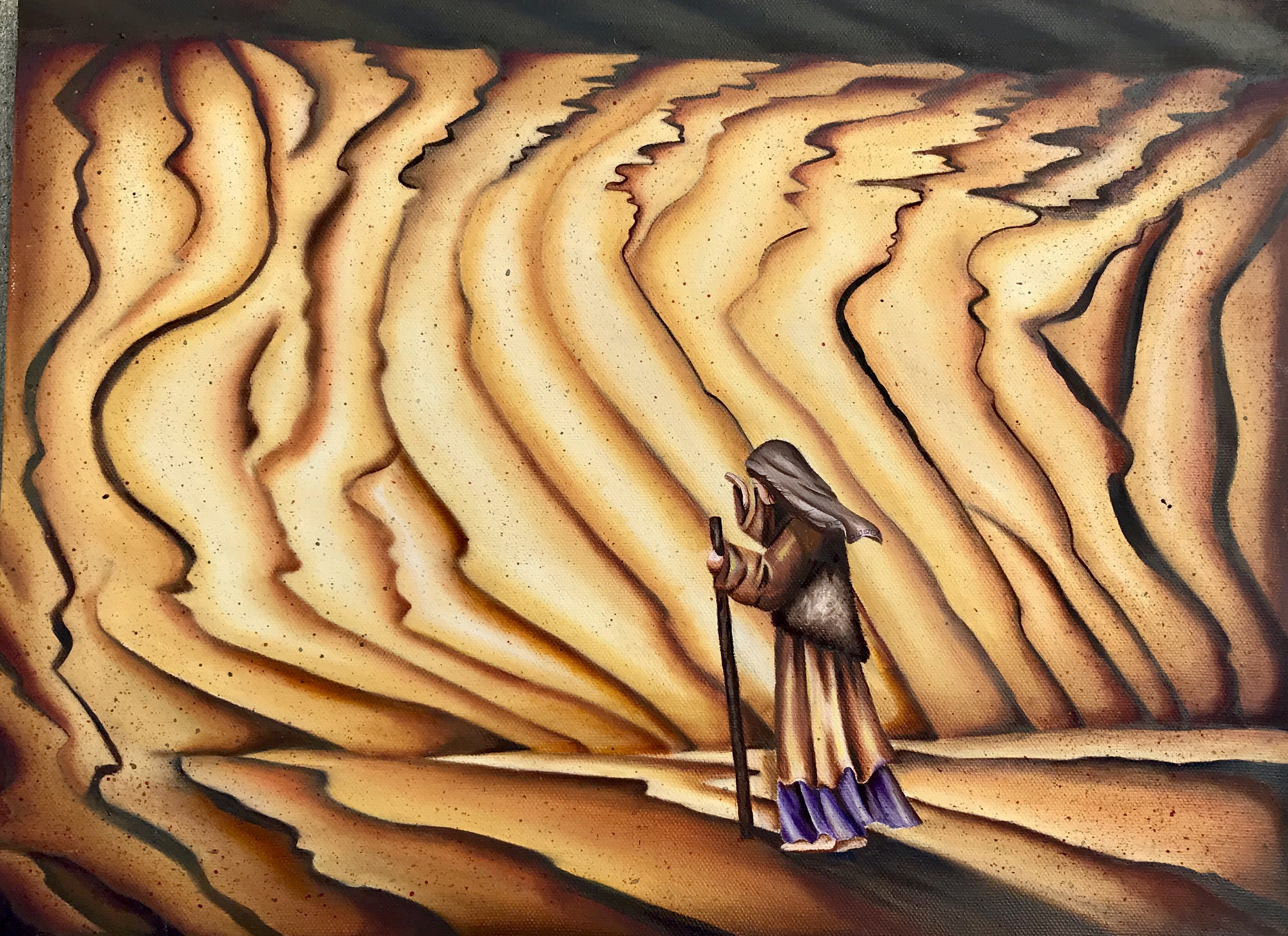
Right now the suffering is not a personal cup, but a World Cup. Besides sickness and death, much of the suffering is confusion and uncertainty about what is coming next. The image that has come to my mind as I think of this is the children of Israel leaving Egypt and wandering in the wilderness for 40 years. They, like us didn’t know where the danger was coming from next. Both then and now seem to be an opportunity to really develop faith.

Like The wandering Israelites, we can trust that God is with us through this suffering and uncertainty, or we can be stubborn and trust our confused and uncertain selves and suffer a great deal more, both mentally and physically. In both Gethsemane and in the wilderness, after praying that the cup passes, an acceptance of suffering and surrender to God can lead to peace and comfort in the midst of pain.

Human connections and The Virus

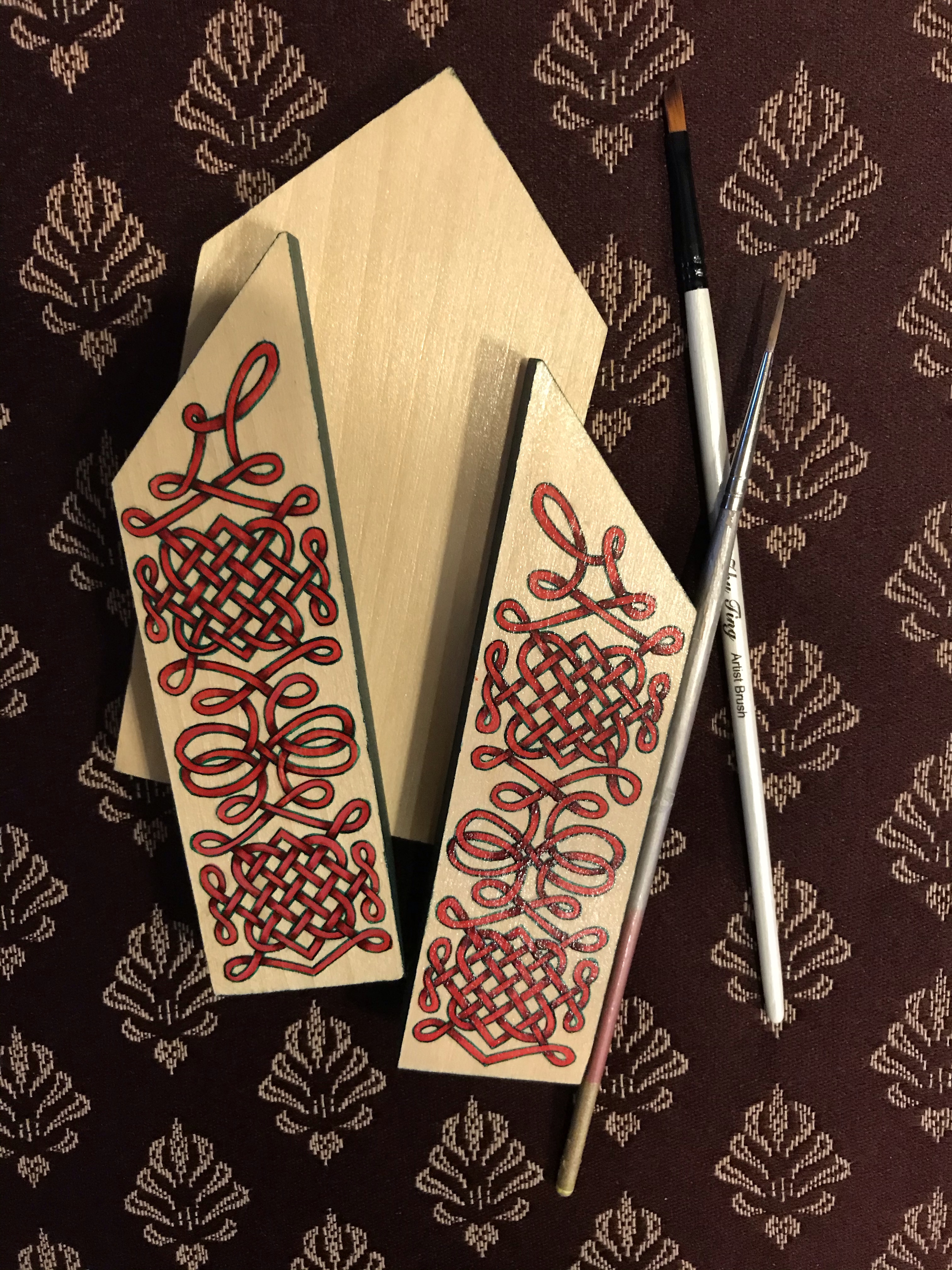
The Ancient Celts believed in the interconnectedness of all things. This idea is depicted in the art as their knot work moves over and under, around and through, with no beginning and no end. When Ireland was Christianized, this belief translated into Christ being in all things and through all things. But the idea of our connection to each other and to nature never completely disappeared.

This deep connection and how we affect each other has never been more clear than with the pandemic of COVID-19. Wherever this wicked germ was born, whether in the body of a bat in some remote cave, or some other secret place, due to our connection with each other and nature, it has profoundly changed lives all over the world.


As I watched the world move from interest to fear I asked God, “What do You want to be for us that we haven’t yet let You be? What do You want to be for me that I haven’t yet allowed You to be?” How is a God that is desperately needed different from a God that is academically debated as an abstract concept?

As the usual business of the world winds down and people are confined to their homes, it seems the world will be forced to “be still” and think about things larger than self, like God. I wonder what will happen to our relationship with our Creator when we slow down and think about our place in human history, our lives and what is larger and more powerful than us.

We are also forced to reflect on the value of relationships with each other, as we find this is not an individual challenge, but we are all in this together. Whether or not we work together will make all the difference for us as a world right now, whether we will heal and be more respectful of the connection we all have with each other, or whether we leave the world in mass devastation.

But while we are asked to be in isolation, it is bad for our mental health. Isolation can breed depression,anxiety and distorted thoughts. So like the virus, which requires us to separate to battle it, it challenges us to use our imagination to stay connected in other ways. Whether it’s singing on the balconies with neighbors like some in Italy have done, having six feet picnics outdoors, using technology or staying connected in other safe and creative ways, it’s time to use our imaginations. We must stay connected to God and each other, and we could find richness and deeper relationships during this pause of normal activity. Through this we can remember we are all interconnected, and truly follow the commandment to Love God and Love our Neighbor like ourselves.

Lent, Fasting, Dieting and God

Lent is the time of year when people think of giving up something for 40 days that they are too fond of, for one of a variety of purposes. The motivations seem to vary from being trendy, to practicing self-discipline and testing endurance, to deepening a relationship with God.

I have always been reluctant to sign up for anything where deprivation is a major component. Even self-discipline, deprivation’s cousin, must have clear benefits before I agree to it. So giving up something for Lent was not something I did for most of my life. Even the ego boost I got from the accomplishment didn’t outweigh the lack. I also knew self-satisfaction was the wrong motivation for giving up my pet habits, which by the way, keeps the sugar industry robust.

That all changed when I heard an Episcopal priest nod approvingly at my growling stomach one hungry Sunday morning and (I think) he said, “That’s good. I make an empty space in my stomach before church so God can fill it up.” Suddenly the 40 day fast wasn’t deprivation, but a deliberate space we usually fill up with other things but we hold open for God. The point is removing that which distract us away from God.

For anyone who has experienced deprivation as part of neglect, trauma or bad luck, Lent fasting is probably especially difficult. I also notice early trauma can create a difficult relationship with food in general. So I thought about how this idea of Lent could help the frustrated dieters that come to therapy. Deprivation clearly is not a good strategy if one has a history of deprivation, given that some research indicates that 97% of all diets one either doesn’t lose weight or gains weight, except for short term losses. What if we invite God into our emptiness and hunger, knowing it is really a relationship with the Divine we want as it satiates, comforts, and even imparts joy?

What if we admitted to God that this is what we really want, but food or alcohol is a quick but imprecise and vague imitation of the feelings that eventually emerge out of a relationship with God? If we need a concrete symbol, we could even set a place at the table for God, reminding ourselves of God’s involvement in this part of our lives.

Lenten fasting was originally a commemoration of the 40 days Jesus spent with God in the desert, and he was able to resist temptation by staying in constant touch with God. In the same way, even in our desert if we invite God into our thoughts and struggles, Lent becomes truly a holy time.

The Light that Came into the World

Light has come into the world. John 3:19a (NIV)

As a therapist I frequently see that the darkness of winter often matches the darkness of thought that can visit during the Christmas season. Many hours are spent in the therapy office every year exploring loneliness, sadness, depression, anxiety, grief and disappointment. While these experiences are real and legitimate, they can be intensified by an over focus on other people’s choices and behavior. The over- emphasis on family during the holidays is a huge factor in Christmas misery.

It is as if our hearts are silently waiting for a quiet but spectacular event. When we put that expectation on Santa, or family, friends or parties we end up with a sense of hollowness, even if these things are good. There is a divine expectation that can only be met by the appearance of the divine.

I think of the most sacred Christmas experiences in my life and they were all between God and I. Sometimes they occurred as I watched snow fall on a deepening night sky and was reminded of the silence that shrouded the miracle of God coming to the world in a humble form. Sometimes I am sitting in the candlelight of a worship service and imagining shepherds and angels and the feelings they had that something spectacular has happened.

My heart leaps for joy when I ponder the mystery of numinous Light coming into the world in a smelly little stable. Meditating on this amazing event and its significance is creates such joy it helps us understand why whatever expectations about other things we might have or want for the holidays are a disappointment in comparison.

Love others but you might not Please Them

If I were still trying to please people, I would not be a servant of Christ.

Paul, Galatians 1:10

Love your neighbor as yourself.

Part of the verse Mark 12;31. Both NIV

These verses seem to make a strange pair. Can a person love someone else as much as themselves, but not feel compelled to please them? It can be difficult to love people who disapprove of us, judge us, or don’t love us back. But if we can love someone who is unlovely or unloving, we participate in a mystery with Christ who loves without love being returned. He loved so deeply he took on the sins of us all, to invite a relationship between God and human that would not have happened otherwise.

Jesus was the Son of God so he apparently could tolerate being despised and rejected by men, but how do we mortals handle rejection? We can do this by getting our need for approval from others out of the way. When we are young, we become civilized by learning from others what is the approved behavior. As we grow emotionally, and have permission to think for ourselves,we do not automatically defer to others to tell us what is correct. Freedom of thought begins with the magical question, “why?”. If we are lucky, we are allowed to ask this question, as it teaches us to reflect.

And if we learn to reflect, along our path of growth we learn that people are not always correct in their assessments. They are not objective. The approved behavior may merely be convenient for them, or decreases their sense of guilt or anxiety. What if what they want is at odds with our spiritual life? What if they are disappointed and love us a little, or a lot less? How can we tell if we are giving others a place God should occupy? We know there is a problem if we are crushed by the disapproval of others, rather than merely disappointed.

I have noticed that we all want to be liked, and we all in our natural, un-defensive state, we value others and seek a positive response from them. If we don’t there is something deeply damaged in us, to the point we have dehumanized ourselves and others. I think that has something to do with the fact that we are all made in the image of God, and at some level we recognize it in others. You can see this when you begin to talk and behave differently when someone comes into the room. Whether it is a friend or a stranger, a certain amount of energy is expended, even just becoming aware of a presence.

Some people expect a lot more than that. Some only feel loved or valued if others agree with them. Since spiritual and psychological identical twins don’t exist, those who need exact mirroring are eventually disappointed. It is only a matter of time, and those who need total agreement will be disappointed and leave so faking agreement only delays the inevitable. The need for mirroring when we are adults is a wound, and it doesn’t heal the wound to trying to copy the wounded person.

Maybe we are one of these wounded, and only feel temporarily loved when someone totally “gets” us, which means understands and often means agrees with us. Not only do we often let other play God by judging us, we may demand they play God by understanding us completely. (Note: Marital advice–don’t look for complete understanding in a marriage. This expectation is too much for a marriage to bear. Marriage is a mystery that unfolds over many years.) This is God’s job, to completely “get” us.

One of God’s great love notes to us in Psalm 139 says that even before a thought is in our head God knows it. God know why we had it, and how many times were had it before. God understands us way better than we understand ourselves.

The most amazing thing we can do is to love when we haven’t been loved, or are not loved. This is Divine. To love but also be true to our spiritual journey when it disappoints others also takes us to a deep and honest place where we can grow in amazing ways. And finally, when we long for something from another person, is that something that can really only be supplied by God? Check with God and see.